
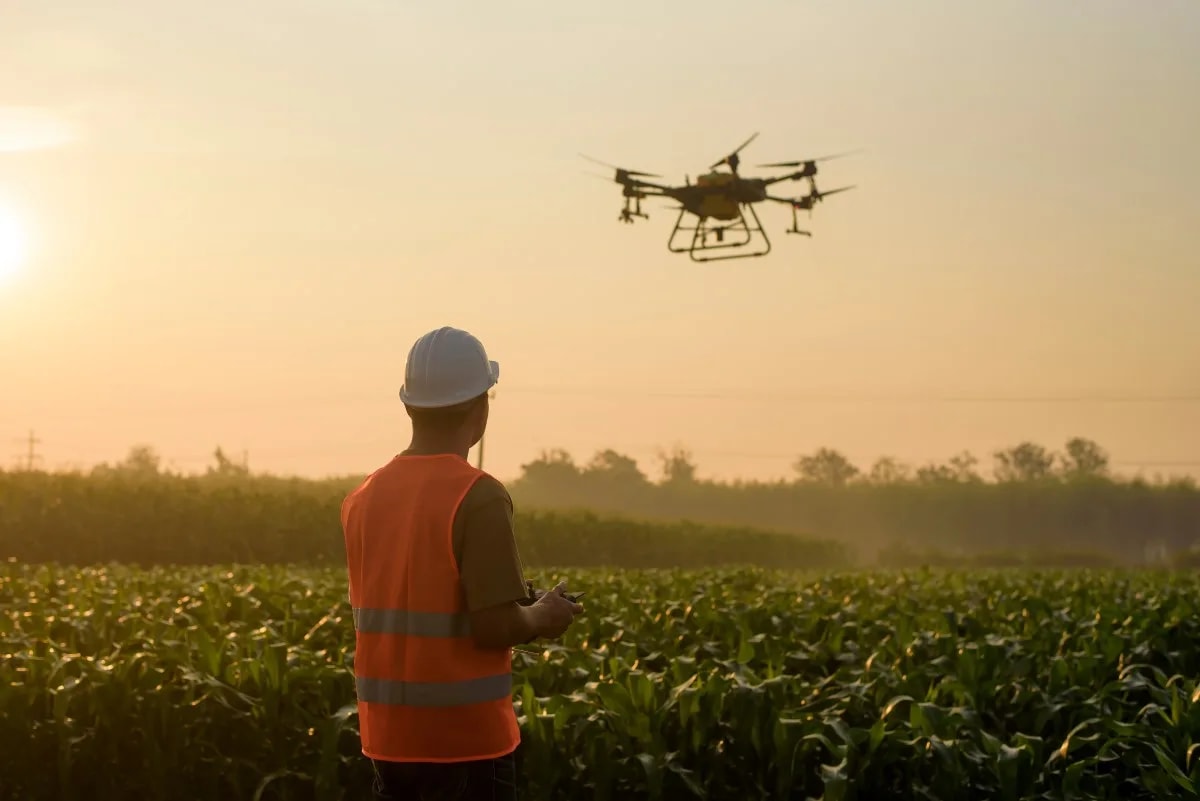
A drone is an unmanned aerial vehicle used, as technology has advanced, in fields such as defence and agriculture. Drone piloting is one of the newer career paths. Training is offered by various institutions. As demand has grown in recent years, anyone who wants to work in this field needs a solid base of knowledge.
With the growth of our defence industry, the technological systems used by the military have become especially important. Military drone piloting is one of the most sought-after roles in this area. Personnel who complete training within the armed forces qualify as military drone pilots. Using an unmanned aerial vehicle is about keeping people as safe as possible.
You do not have to work for an official institution to become a drone pilot. Commercial drone operations also require specific knowledge. You need to understand the aircraft’s capabilities and how to fly it well. That expertise can contribute to commercial income.
What Does a Drone Pilot Do?
Anyone who wants to work in this field needs substantial knowledge. It is a specialist profession. Completing specialist training is what qualifies someone as a drone pilot. A drone pilot works according to the needs of commercial, military, and similar sectors — in other words, they operate as a drone operator.
For example, if the work is not commercial, it may only be carried out by security personnel such as soldiers or police officers. A drone pilot’s main duties include:
1. Knowing every mechanical characteristic of the aircraft, and therefore inspecting its internal and external parts.
2. Handling regular maintenance and repair.
3. Mastering the remote controller so that flights can be carried out safely.
4. Continuing to develop as the aircraft’s features change and improve.
5. Having enough knowledge of simulation technologies, and pushing the aircraft’s limits in order to improve it.
6. Continuously developing drone flight techniques and applying them on the job.
For these reasons and more, becoming a drone pilot has attracted growing interest among young people.
What Do You Need to Become a Drone Pilot?
People who have the specialist knowledge described above already meet the core requirements. Starting work at certain organisations, however, also requires training certificates. Those certificates are issued by the Directorate General of Civil Aviation (SHGM). Police or military personnel also receive different training depending on the type and capabilities of the drone they will fly. After that training they qualify for a licence matching the aircraft class they will operate.
Aircraft of 500 grams and above, as well as import and sale of those aircraft, may require registration. Registration on the Directorate General of Civil Aviation website is mandatory. After that registration step, a certificate is issued for use of the aircraft.
Note: As Shark Aviation, we provide in-field flight training to every pilot candidate who purchases an agricultural drone from us.
How to Become a UAV Pilot
A UAV (İHA) pilot can find work in the film industry and in security organisations. Entering the profession still requires several conditions, in this order:
1. You need a full working knowledge of UAVs, which means completing the relevant training.
2. You must hold a UAV licence. These licences are classed by aircraft weight as İHA-0, İHA-1, İHA-2, and İHA-3.
3. A certificate from an official or private organisation is required.
4. That certificate must be approved in the Directorate General of Civil Aviation system.
Once those steps are complete, you qualify for a certificate and can work as a UAV pilot. You can also view the certificate on the e-Devlet portal.
How Much Does a Drone Pilot Earn?
A drone pilot can earn between 9,000 and 15,000 TL. Interest among younger generations in drones and how to fly them is said to have grown by about 30% in recent years. Because younger people live so closely with technology — and because some of them earn a living from it — interest in this field continues to concentrate.
How Do You Get a Drone Licence?
As noted above, drone licences are classified by aircraft weight. Drones under 500 grams do not require a licence. There is also no training requirement for drones used only for personal purposes. In practice, getting a licence depends on how you will use the aircraft. Commercial, military, and personal use each map to different licence classes.
For personal use there are two classes: İHA-0 and İHA-1. You can obtain that licence by first passing the exam prepared by the Directorate General of Civil Aviation. Drones flown for that purpose still have different licence types by weight.
For example, aircraft from 500 grams up to 4 kilograms require an İHA-0 licence. Aircraft from 4 kilograms up to 24 kilograms require an İHA-1 licence.
Which Commercial Drone Licences Exist?
Commercial drone licence training can be delivered by various institutions. Commercial licences still have to be approved by the Directorate General of Civil Aviation. When people look into the cost, they often hope to find a free drone licence. Commercial drone licences fall into three classes — İHA-0, İHA-1, and İHA-2 — and the class depends on the aircraft’s weight. They are listed below:
1. DJI, Phantom 3 Standard, 1216 g (system and take-off weight): İHA-0
2. DJI, Phantom 3 Advanced, 1280 g (system and take-off weight): İHA-0
3. DJI, Phantom 3 Pro, 1280 g (system and take-off weight): İHA-0
4. DJI, Phantom 3 4K, 1280 g (system and take-off weight): İHA-0
5. DJI, Phantom 4, 1380 g (system and take-off weight): İHA-0
6. DJI, Phantom 4 Advanced, 1368 g (system and take-off weight): İHA-0
7. DJI, Phantom 4 Pro, 1388 g (system and take-off weight): İHA-0
8. DJI, Mavic Pro, 743 g (system and take-off weight): İHA-0
9. DJI, Inspire 1 + Zenmuse X3, 3060 g (system and take-off weight): İHA-0
10. DJI, Inspire 1 + Zenmuse Z3, 3250 g (system and take-off weight): İHA-0
11. DJI, Inspire 1 + Zenmuse XT, 3076 g (system weight), 3500 g (take-off weight): İHA-0
12. DJI, Inspire 1 + Zenmuse X5R, 3486 g (system and take-off weight): İHA-0
13. DJI, Inspire 1 + Zenmuse X5, 3578 g (system and take-off weight): İHA-0
14. DJI, Inspire 2 + Zenmuse X4S, 3999 g (system and take-off weight): İHA-0
15. DJI, Inspire 2 + Zenmuse X5S, 4150 g (system and take-off weight): İHA-1
16. DJI, Matrice 200 TB50 + Zenmuse X4S, 4053 g (system weight), 6140 g (take-off weight): İHA-1
17. DJI, Matrice 200 TB55 + Zenmuse X4S, 4753 g (system weight), 6140 g (take-off weight): İHA-1
18. DJI, Inspire 2 + Zenmuse X5S, 4150 g (system and take-off weight): İHA-1
19. DJI, Matrice 200 TB55 + Zenmuse X5S, 4961 g (system weight), 6140 g (take-off weight): İHA-1
20. DJI, Matrice 200 TB50 + Zenmuse Z30, 4356 g (system weight), 6140 g (take-off weight): İHA-1
21. DJI, Matrice 200 TB55 + Zenmuse Z30, 5056 g (system weight), 6140 g (take-off weight): İHA-1
22. DJI, Matrice 200 TB50 + Zenmuse XT, 4070 g (system weight), 6140 g (take-off weight): İHA-1
23. DJI, Matrice 200 TB55 + Zenmuse XT, 4770 g (system weight), 6140 g (take-off weight): İHA-1
24. DJI, Matrice 210 TB50 + Zenmuse Z30 + XT, 4620 g (system weight), 6140 g (take-off weight): İHA-1
25. DJI, Matrice 210 TB55 + Zenmuse Z30 + XT, 5320 g (system weight), 6140 g (take-off weight): İHA-1
26. DJI, Matrice 210 TB50 + Zenmuse Z30 + X5S, 4950 g (system weight), 6140 g (take-off weight): İHA-1
27. DJI, Matrice 210 TB55 + Zenmuse Z30 + X5S, 5650 g (system weight), 6140 g (take-off weight): İHA-1
28. DJI, S1000+, 4200 g (system weight), 11000 g (take-off weight): İHA-1
29. Matrice 100 TB47 + Zenmuse X3, 2602 g (system weight), 3500 g (take-off weight): İHA-0
30. Matrice 600 TB 47S, 9500 g (system weight), 15500 g (take-off weight): İHA-1
31. Matrice 600 TB 48S, 10000 g (system weight), 15500 g (take-off weight): İHA-1
32. AGRAS MG-1, 22500 g (system weight), 24500 g (take-off weight): İHA-1
33. AGRAS MG-1S, 23800 g (system weight), 24500 g (take-off weight): İHA-1
Note: For the licence class required for DJI Agras T10, DJI Agras T30, and DJI Agras T40 models, [call us](/contact) for details.
Drone Operation Training
This training is offered by various official and private organisations for people who want to become drone pilots. Completing it leads to a certificate or licence. Before applying, you should take training from a reliable institution approved by the Ministry of National Education (MEB) and the Directorate General of Civil Aviation.