
The words “UAV” and “drone” often describe the same aircraft. In military and technical work, however, they are not always interchangeable. The term you choose can affect how a system's role, operating requirements, and level of autonomy are understood.
What UAV, UAS, and drone mean
UAV stands for unmanned aerial vehicle. It is the formal term commonly used in military doctrine, technical specifications, and procurement documents.
UAS stands for unmanned aircraft system. This broader term covers the aircraft as well as the ground control station, communication links, and other elements required to operate it.
Drone is the term most familiar to the public. Its use for radio-controlled aircraft dates back to the first half of the 20th century. It later became a general label for remotely piloted aircraft as consumer multicopters grew more common.
In everyday language, “drone” is clear and widely understood. In technical, military, and regulatory documents, UAV or UAS usually describes the system more precisely.
Why the distinction matters in military use
Military terminology must define what a system is, how it operates, and which requirements apply to it. “Drone” alone may refer to anything from a consumer multicopter to a purpose-built military aircraft. UAV and UAS place the aircraft within a more specific technical and operational context.
Classification and doctrine
Military UAVs are classified according to factors such as weight, operating altitude, range, and mission. These categories may determine airspace procedures, operator training, maintenance, and command responsibility.
For this reason, capability requirements and tender documents generally use UAV or UAS. Precise terminology helps procurement teams distinguish between commercial equipment and systems developed for military use.
Levels of autonomy
The aircraft's level of autonomy is a separate question from the name used for it. Unmanned aircraft can operate with different levels of human control:
- Remotely piloted aircraft (RPA): An operator controls the aircraft throughout the flight
- Semi-autonomous UAV: The aircraft can follow a planned route, maintain altitude, or return to base without continuous input, while specified decisions remain with the operator
- Autonomous UAV: The aircraft can make certain decisions using onboard sensors and software without real-time operator input
These distinctions carry operational, legal, and ethical implications. The general term “drone” does not indicate where a system sits on this spectrum.
Loitering munitions
Loitering munitions fly to an operating area, remain airborne while a target is identified, and then engage the selected target. They combine observation and engagement functions in a single-use system.
They fall within the wider field of unmanned aircraft but occupy a distinct operational category. Unlike reusable intelligence, surveillance, and reconnaissance (ISR) UAVs, they carry a warhead and are subject to different mission and engagement requirements. Labels such as “kamikaze drone” may appear in public reporting, but they are not precise technical terms.
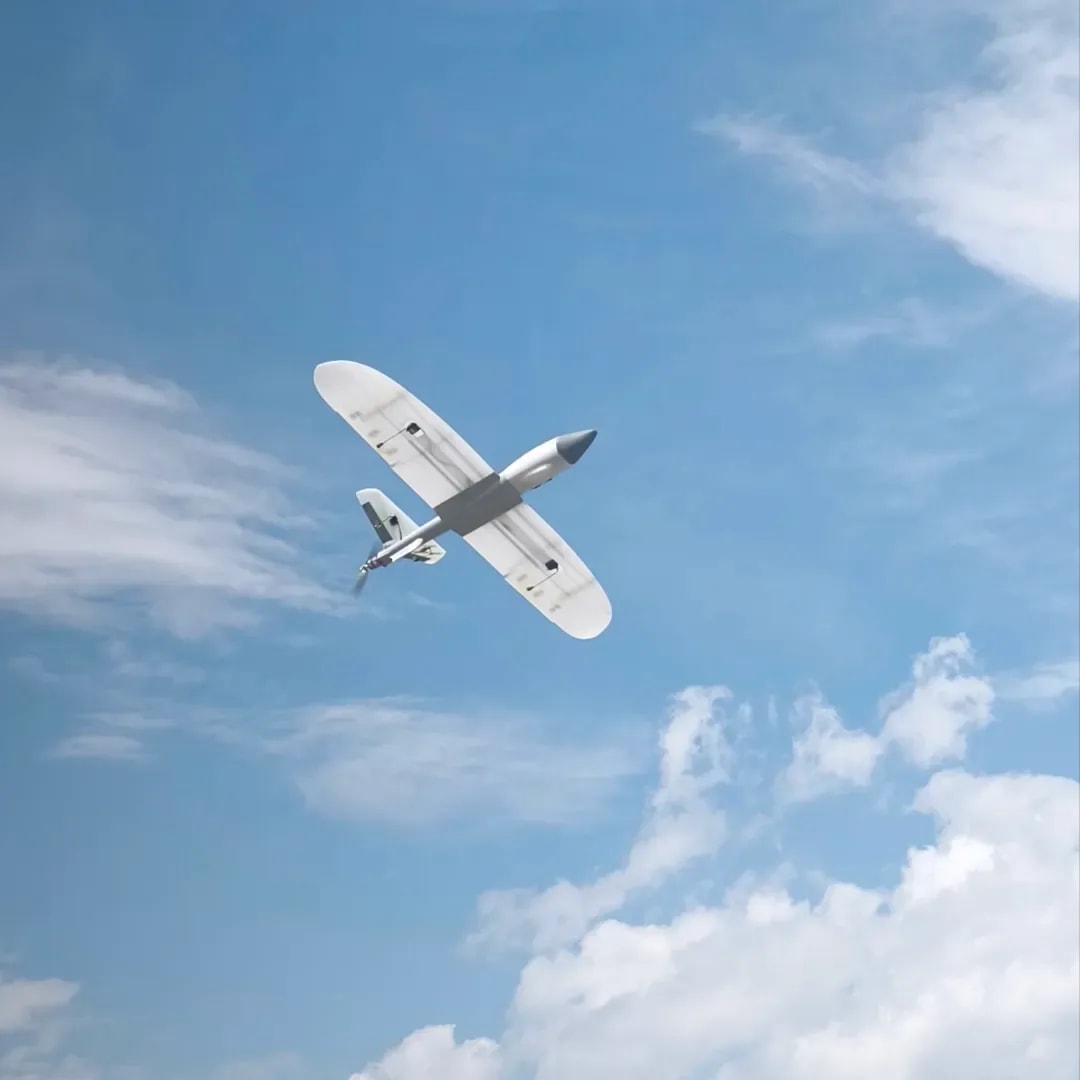
Shark Blue is Shark Aviation's fixed-wing loitering munition UAV for this category. The name “drone” alone does not explain the platform's intended role.
Why both terms remain in use
UAV and UAS are appropriate when technical precision matters. They connect the aircraft to its operating system, documentation, maintenance requirements, and mission framework.
Drone works well in public communication because readers recognise it immediately. Using the word is not inaccurate; it is less specific.
Problems arise when broad language carries into requirements or procurement. A request for a “surveillance drone,” for example, does not define the required endurance, payload, communication system, or operating conditions. A clear specification must state those requirements directly.
Common military UAV categories
Military UAVs are commonly grouped by their size, endurance, operating altitude, launch method, and mission:
- MALE (medium-altitude, long-endurance): Large aircraft built for long-duration missions at medium altitude, including persistent ISR and strike roles
- Tactical UAV (TUAV): Systems used for shorter-range reconnaissance and tactical support, often launched by hand or from a vehicle
- Loitering munition: Single-use systems that can remain in an area before engaging an identified target
- Micro-UAV and nano-UAV: Small aircraft used for close-range observation, including in urban or restricted environments
Not every platform fits neatly into one category. Shark Tiger sits between conventional tactical UAVs and larger long-endurance systems. Shark Blue and Shark Blue Mini belong to the loitering munition category.
How Shark Aviation uses these terms
We use UAV and UAS in technical documents where the distinction affects requirements, integration, or operation. We use drone in broader communication when it helps readers identify the subject quickly.
In either case, the name is only a starting point. A useful description must state the aircraft's role, operating concept, and relevant technical requirements.
To discuss an unmanned aircraft requirement or integration project, visit our contact page.